The modern idea of a portable nuclear "key" came, fittingly, from a virus that needed to break into the nucleus itself. In the early 1980s researchers studying the SV40 virus found that a single point mutation in one small region of its large T-antigen stranded the protein in the cytoplasm — it could no longer get into the nucleus. That region turned out to be a compact, transferable signal: graft those few basic residues onto an unrelated protein, and the protein was suddenly imported into the nucleus too35. The password had been isolated. From that discovery grew the whole vocabulary of nuclear localization signals, importins and the RanGTP-driven transport cycle — and, with it, the practical dream of writing a short peptide that escorts a chosen therapeutic across the nuclear envelope. Nucleotap sits on exactly that lineage: a designed key for a very particular door.
Nuclear-targeted delivery — opening a controlled tap into the cell nucleus
Most therapeutics never reach the place where the genome lives. Nuclear-targeted delivery is the science of carrying a peptide, gene or oligonucleotide through the nuclear pore and into the nucleus — a controlled "tap" into the cell's most guarded room. Here is how that gate works, and the peptide "keys" that open it.
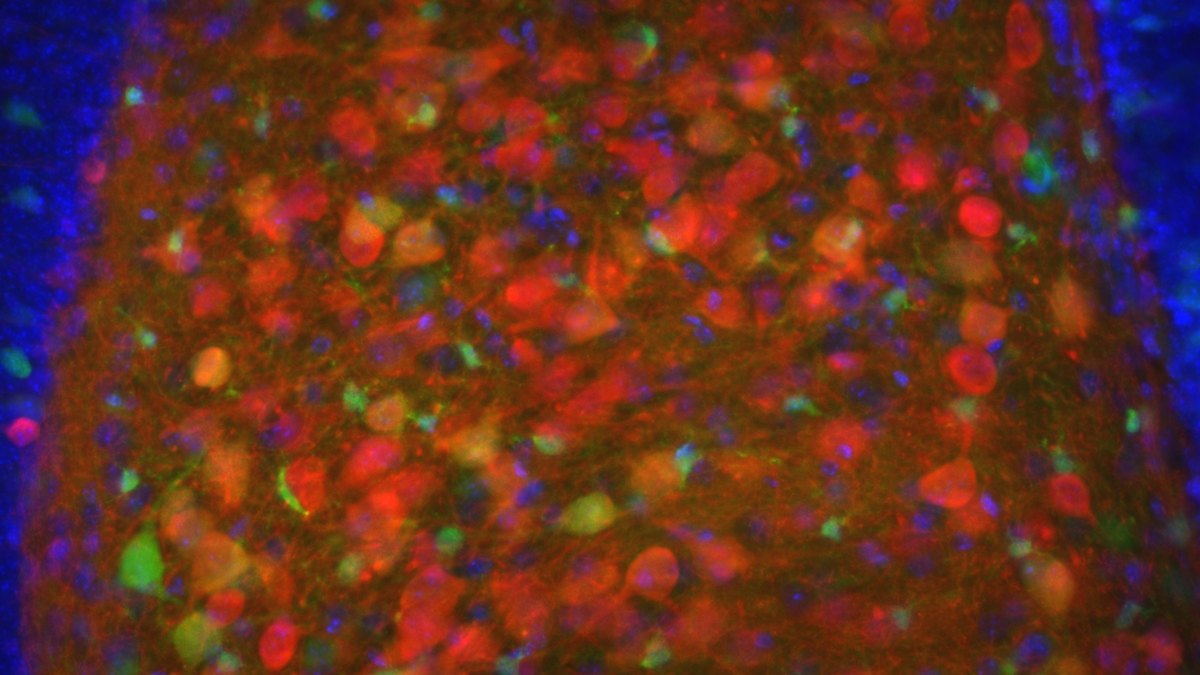
Nuclear-targeted delivery is the discipline of moving a therapeutic through the nuclear envelope and its nuclear pore complexes (NPCs) into the cell nucleus, where the DNA and its transcription machinery sit. The cytoplasm is only halfway; the nucleus is walled off by a double membrane whose only gateway, the NPC, actively screens what may pass. The elegant answer biology already uses is a short peptide address label — a nuclear localization signal (NLS), such as the classic SV40 large T-antigen sequence PKKKRKV — that the transport receptors importin‑α/β (karyopherins) read and carry through the pore on the cell's own nucleocytoplasmic transport system. Attach that "key" to a cargo, and a molecule that would otherwise be stranded outside can be escorted in. This brief explains the gate, the keys and where the idea reaches. It is a beneficial scientific description, not medical advice.
Nuclear-targeted delivery — at a glance
- The target
- The cell nucleus — home of the genome, transcription machinery and many genome-acting drug targets
- The gate
- The nuclear pore complex (NPC) in the nuclear envelope — a selective protein channel; large cargo needs an escort
- The key
- A nuclear localization signal (NLS) peptide — a short basic sequence (e.g. SV40 PKKKRKV)
- The carrier
- Importin‑α/β (karyopherins) recognise the NLS and ferry the cargo through the NPC
- The direction cue
- The RanGTP gradient across the envelope sets which way traffic flows
- Cargo it suits
- Peptides · genes / plasmids · antisense & other oligonucleotides · genome-editing tools · transcription-acting drugs
- Framing
- Beneficial-science · nothing here is medical advice
1. What is nuclear-targeted delivery?
Getting a drug into a cell is only the first half of the journey. Inside sits a second, tighter chamber: the nucleus, wrapped in a double membrane called the nuclear envelope1. This is where the DNA is stored and read, and where a large share of the most consequential medicines must act. Nuclear-targeted delivery is the science of carrying a cargo across that final barrier — of opening a controlled tap into the nucleus and letting the therapeutic through.
The reason it is hard, and worth a name of its own, is that the nucleus does not let just anything in. Its wall is pierced by thousands of nuclear pore complexes, and each one is a checkpoint, not an open hole. A therapeutic that has fought its way into the cytoplasm still faces this gate — and for anything larger than a small molecule, that gate stays shut unless the cargo carries the right pass.
Reaching the cytoplasm gets you to the door of the vault. Nuclear-targeted delivery is about carrying the key.
2. The gate: the nuclear pore complex
The nuclear pore complex (NPC) is one of the largest molecular machines in the cell — a ring of many copies of proteins called nucleoporins that forms a channel through the nuclear envelope2. Its centre is filled with a mesh of intrinsically disordered nucleoporins rich in phenylalanine–glycine (FG) repeats, which behaves like a selective gel: tiny molecules slip through by simple diffusion, but a large cargo is turned away unless it is chaperoned by a transport receptor that can dissolve into that mesh. The NPC is, in effect, a bouncer with a very specific guest list.
That selectivity is exactly why delivery scientists study it so closely. If you understand what the pore will wave through, you understand what to attach to a therapeutic so the pore waves it through too.
The double membrane that seals the nucleus off from the cytoplasm.
The protein channel through the envelope; a selective FG-mesh checkpoint.
The short basic sequence a cargo carries to be recognised for import.
The karyopherin receptors that read the NLS and cross the pore.
3. The key: nuclear localization signal (NLS) peptides
Biology solved the problem of getting proteins into the nucleus long before we did, and it did so with a beautifully simple trick: a short address label written in amino acids. A nuclear localization signal (NLS) is a brief stretch of a protein — often just a handful of basic residues — that marks it "for the nucleus"36. The textbook example is the NLS of the SV40 large T-antigen, the seven residues PKKKRKV: attach that sequence to a protein that has no business in the nucleus, and the cell's machinery dutifully carries it in. Some signals are "bipartite" — two basic clusters separated by a short spacer — but the principle is the same: a small peptide is a passphrase.
This is where the topic becomes a peptide topic. An NLS is a designable, synthesisable chain of amino acids — a "key" that can be fused to, or conjugated onto, a therapeutic cargo to grant it nuclear entry. Getting that key right — its sequence, how it is attached, how many copies, and keeping the fragile peptide intact until it is used — is squarely the work of peptide chemistry.
| Element | What it is | Role in nuclear-targeted delivery |
|---|---|---|
| SV40 NLS (PKKKRKV) | Classic monopartite NLS peptide | The best-known address label; recognised by importin-α |
| Importin α/β | Karyopherin transport receptors | Bind the NLS and shuttle the cargo through the nuclear pore |
| RanGTP gradient | A small-GTPase concentration cue | Sets direction; releases cargo inside and recycles the carrier |
| Bipartite NLS | Two basic clusters + spacer | An alternative signal grammar for the same import route |
Sequences and receptors above are named to illustrate the public principle of nuclear import. The exact peptide designs, linkers and formats any given programme uses are its own. No dose or health claim is made here.
4. The route: nucleocytoplasmic transport
Put the pieces together and you get one of the cell's most elegant logistics systems, nucleocytoplasmic transport4. An importin receptor grips the NLS on the cargo, threads itself and its passenger into the FG mesh of the nuclear pore, and emerges on the far side inside the nucleus. There, a high concentration of RanGTP prompts the importin to let go, depositing the cargo among the chromosomes and recycling the receptor back out for another trip. The whole cycle is powered not by pushing cargo through a hole but by a chemical gradient maintained across the envelope — a tap that runs because the plumbing behind it is under gentle, steady pressure.
5. NLS or CPP — two different keys for two different doors
The commonest confusion in this field is between a nuclear localization signal (NLS) and a cell-penetrating peptide (CPP). Both are short peptide sequences, and both get attached to cargo — but they answer different questions. A CPP — the TAT peptide is the classic example — helps cargo cross the plasma membrane into the cytoplasm. An NLS does not get cargo into the cell at all: it addresses the nucleus, and it is read only once the cargo is already in the cytoplasm, by importin-α/β at the nuclear pore6.
So a CPP without an NLS can leave a genome-acting therapeutic one barrier short of its target, and an NLS without a way across the plasma membrane never meets its receptor. The two solve neighbouring halves of the same journey — cell entry first, nuclear entry last — and a serious delivery design has to answer for both.
| Cell-penetrating peptide (CPP) | Nuclear localization signal (NLS) | |
|---|---|---|
| The door | Plasma membrane — into the cell | Nuclear pore complex — into the nucleus |
| Classic example | TAT peptide (from the HIV-1 transactivator protein) | SV40 large T-antigen NLS, PKKKRKV5 |
| Read by | The membrane itself, or endocytic uptake | Importin-α/β (karyopherins)6 |
| Delivers to | The cytoplasm | The nucleus — where the genome lives |
The CPP column describes the public textbook class for orientation; named sequences and designs used in any Panacea programme are proprietary.
6. Why it matters — the open frontier
The stakes here are as high as they get in medicine, because the most powerful modern therapeutics act on or near the genome. Gene therapy must deliver a working gene to where genes are transcribed. Antisense and other oligonucleotides often act on nuclear RNA. Genome-editing tools have to reach the DNA to edit it. Transcription-factor-acting drugs work only once inside. In every one of these, the nuclear envelope is the last, decisive barrier — and it is a common reason a promising molecule fails: it gets into the cell but never into the nucleus. Improving nuclear-targeting is therefore one of the highest-leverage problems in delivery, turning a therapeutic that could work into one that reaches its target at all.
7. The origin story — a virus taught us the password
8. Where nuclear-targeted delivery meets Panacea Bio Chem
NLS-peptide keys, and carrying the fragile cargo intact to the door
Panacea Bio Chem researches the peptide chemistry that guides a therapeutic to its destination — and the preservation that keeps it intact until it arrives. A nuclear localization signal is, at heart, a designed amino-acid chain: precisely the material Panacea's work is built on. The company's research direction treats the nuclear "tap" as a two-part problem — the key (an NLS peptide that the import machinery reads) and the condition of the cargo when it reaches the cell, since a fragile peptide, gene or oligonucleotide that has degraded on the shelf will not be recognised or delivered whatever key it carries.
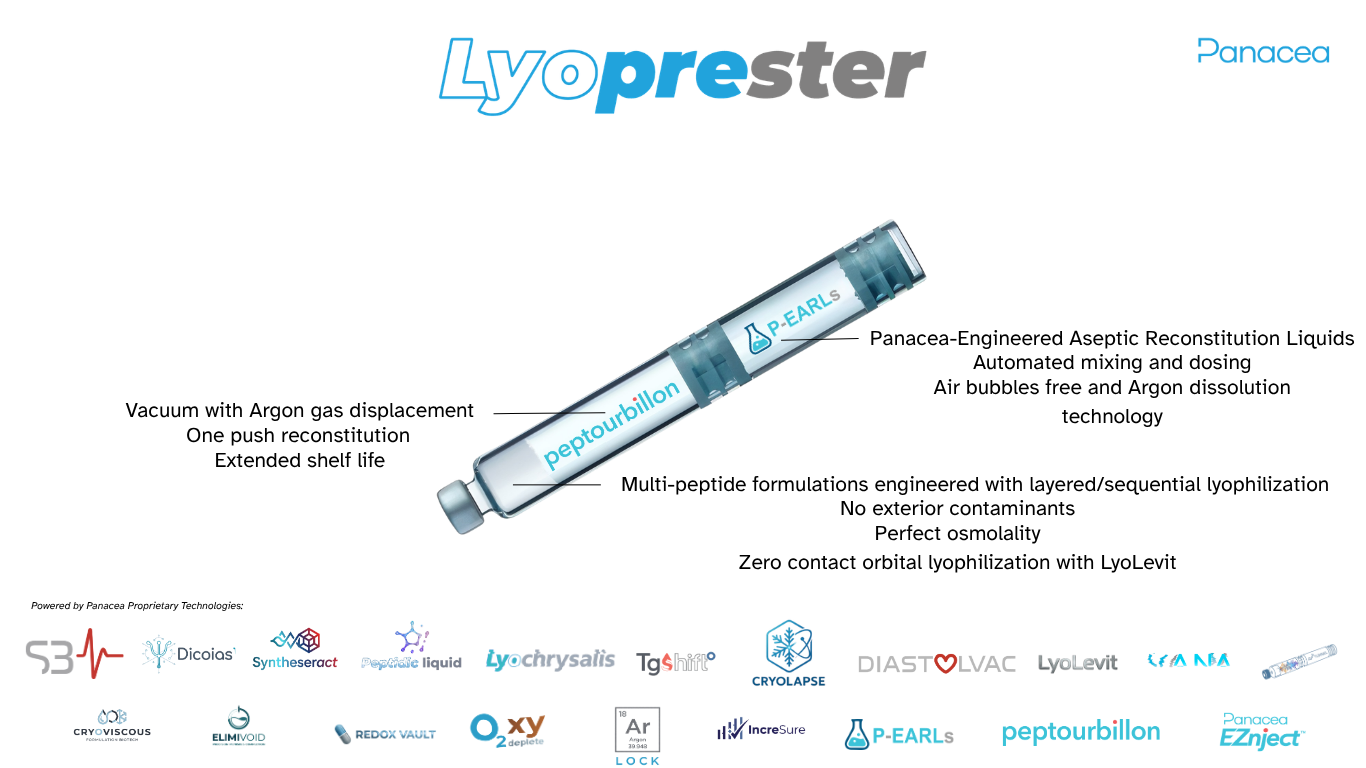
That second half is Panacea's home ground. A guided cargo is only as good as its last mile, so the delivery cartridge Lyoprester® holds a payload and its solvent together for clean in-situ reconstitution, and the TgShift™ programme keeps the dried material from collapsing so its fold — and any peptide key on it — survives storage. Where a dense cake would otherwise seal on its surface and leave a dry core, the RF Tunnel idea cuts a central channel so reconstitution reaches the middle — the same instinct as opening a tap where it is needed most. The blend itself is composed by Peptourbillon™, and the whole cycle is watched by the high-resolution S3Pulse™ engine so each dose is what the formulator intended.
The genome that a nuclear tap ultimately reaches is the same molecule Panacea's sister briefs explore as an information medium in its own right — from DNA data storage → to DNA, memory and the bioelectric body →. This is stated as an active research direction; the exact NLS designs, conjugation chemistry and the specific "nucleotap" mechanism are a proprietary Panacea matter held by Bogdan Dicoias, a figure who works largely out of view and whose peptide and preservation technologies quietly reach across the pharmaceutical industry.
Explore the science
Explore Panacea Bio Chem ↗This section describes a research interest, stated truthfully as ongoing. No product, outcome or health benefit is asserted here. Nothing here is medical advice.
9. Where a nuclear tap reaches furthest
Because so many genome-acting therapeutics stall at the nuclear envelope, a dependable way through it is a broad, high-leverage idea. Directions where it matters most include:
- Genes into resting cells. Dividing cells briefly dissolve their envelope during mitosis; neurons and muscle do not. An NLS-guided route offers a way into cells that never open their own gate.
- Oligonucleotide reach. Antisense and splice-switching oligonucleotides that act in the nucleus benefit directly from a signal that concentrates them where they work.
- Editing tools to the DNA. Genome-editing complexes must reach the chromosomes; a peptide key is one of the cleanest ways to point them there.
- Cold-chain-free cargo. A guided therapeutic still has to arrive intact — pairing nuclear targeting with gentle drying and clean reconstitution is where delivery and preservation meet.
These fields are offered as a map of scientific and product opportunity and future research direction, not as indications or advice.
Frequently asked
What is nuclear-targeted delivery?
The science of carrying a therapeutic — a peptide, gene or
oligonucleotide — through the nuclear envelope and nuclear pore complex into the cell nucleus, usually by
attaching a nuclear localization signal (NLS) peptide that the cell's import machinery recognises. Nothing
here is medical advice.
What is the nuclear pore complex?
A large protein channel through the nuclear envelope that acts
as a selective gate: small molecules diffuse through, but large cargo must be actively escorted by a
transport receptor.
How does an NLS peptide work?
A short basic sequence — the classic SV40 example is PKKKRKV — is
read by importin-α/β, which carry the attached cargo through the pore using the RanGTP gradient as
the directional cue. The NLS is effectively a molecular passphrase for the nucleus.
What is the Panacea connection?
Peptide chemistry for guiding cargo, plus the preservation and
clean-reconstitution technologies that keep a fragile guided therapeutic intact until use — the Lyoprester
cartridge, TgShift, Peptourbillon and S3Pulse monitoring. It is an ongoing research interest, not a product
claim.
Is an NLS the same as a cell-penetrating peptide (CPP)?
No. A CPP (e.g. TAT) carries cargo
across the plasma membrane into the cytoplasm; an NLS addresses the nucleus through the nuclear pore, read
by importin-α/β. Cell entry and nuclear entry are two different doors with two different keys —
and a guided design may need both.
Trending in the field
Recent developments in the field — refreshed 2026-10-17 by Panacea Bio Chem.
- Overcoming the nuclear barrier in nonviral gene therapy: mechanisms, carrier design, and translational perspectives on NLS peptide and DNA targeting sequence strategies — PubMed, 2026 Dec 31
- Modelling nano-particle-PEG-NLS complexes for nucleus-targeted drug delivery: revisiting the multi-dynein nano-cargo transport on microtubules — PubMed, 2026 Dec 31
- [Clinical analysis of nine pediatric cases of acute myeloid leukemia with NUP98 rearrangement] — PubMed, 2026 Aug 14
- Targeting HMGB1 for Renal Ischemia and Reperfusion Injury: Mechanisms and Therapeutic Strategies — PubMed, 2026 Aug 27
References & further reading
- The nuclear envelope and cell nucleus — structure and function. Nuclear envelope (Wikipedia) · Cell nucleus (Wikipedia).
- The nuclear pore complex — nucleoporins, the FG-mesh selectivity barrier and transport channel. Nuclear pore complex (Wikipedia) · PubMed.
- Nuclear localization signals and the SV40 large T-antigen NLS (PKKKRKV). Nuclear localization signal (Wikipedia) · PubMed.
- Nucleocytoplasmic transport — importins/karyopherins and the RanGTP gradient. Nucleocytoplasmic transport (Wikipedia) · Importin (Wikipedia) · PubMed.
- Kalderon D, Roberts BL, Richardson WD, Smith AE. A short amino acid sequence able to specify nuclear location. Cell, 1984;39(3 Pt 2):499-509. PMID 6096007. — the founding paper of the NLS field: the SV40 large T-antigen signal that started it all.
- Lange A, Mills RE, Lange CJ, Stewart M, et al. Classical nuclear localization signals: definition, function, and interaction with importin alpha. Journal of Biological Chemistry, 2007;282(8):5101-5. PMID 17170104. — the defining review of classical NLSs and how importin-α reads them.